[Technology Newsletter] Monthly Update on AI Models, Frameworks, Tools & Platforms - Sep 2026
Cẩm nang công nghệ
04/11/2026
September was less about a single breakthrough than a structural shift in how AI is packaged for real work. Frontier models improved computer use, coding, science and cybersecurity, while vendors simultaneously pushed cheaper reasoning tiers, persistent agents, stronger execution sandboxes, and more efficient inference infrastructure. For technology teams, the practical decision is increasingly a system-design question: which model, harness, tools, permission boundaries, memory strategy and infrastructure produce reliable, completed tasks at an acceptable cost?
THE MONTH IN 4 SIGNALS
- Model capability is spreading across multiple price tiers, making workload routing more important than a single default model.
- Agent runtimes are becoming platform primitives: long-running execution, subagents, sandboxes and tool governance are moving into managed infrastructure.
- Inference economics now depend on the full stack — model architecture, caching, interconnects, serving software, power and cooling — not only GPU count.
- Physical AI is moving from demonstrations toward deployable systems, making safety, simulation, validation and fleet operations first-class engineering concerns.
Top Stories
MODEL RELEASE · 3 SEPTEMBER
OpenAI launches GPT-6 Astra, pairing stronger computer use with a higher cyber-risk classification
OpenAI released GPT-6 Astra on 3 September as the top model in its new GPT-6 family. The launch emphasized computer use, software engineering, science and professional workflows; OpenAI also said Astra is the first model it has classified at the Critical level for cybersecurity capability under its Preparedness Framework.
For developers, the important shift is not only benchmark performance. Astra is designed to carry out multi-step work across browsers, code and professional software, while OpenAI added stronger monitoring, isolation and task-boundary controls because the same capability increase also raises misuse risk. API access is available as gpt-6-astra, with broader availability across ChatGPT work surfaces and partner clouds.
| Why it matters: Computer-use models are moving from “assistant” behavior toward execution across real software. That raises the value of end-to-end task evaluations, but it also makes authorization, action review, and sandbox design first-class engineering concerns. |
Source: OpenAI — GPT-6 Astra: A new generation of intelligence · 3 Sep 2026
Source: OpenAI — Safety overview: GPT-6 Astra · 3 Sep 2026
MODEL RELEASE · 2 SEPTEMBER
Google introduces Gemini 3.8 Flash and a separate Cyber variant for trusted defenders
Google introduced Gemini 3.8 Flash as a faster workhorse model aimed at coding, agentic tasks and multi-step reasoning, priced at the same introductory rate as 3.7 Flash. A second model, Gemini 3.8 Flash Cyber, is restricted to trusted defenders through Google DeepMind’s Fairwind Program and is tuned for vulnerability discovery and automated patching.
Google’s announcement is notable for the split deployment model: the general Flash model targets high-volume developer workloads, while the Cyber variant exposes more sensitive capabilities under a controlled-access program. Google also reports that the Cyber model is already being used internally for security work, including vulnerability research and patch generation.
| Why it matters: Specialized high-capability variants are becoming a practical pattern for dual-use domains. Security teams should expect model access, logging and user verification to differ by capability class rather than treating every model endpoint as interchangeable. |
Source: Google — Introducing Gemini 3.8 Flash and 3.8 Flash Cyber · 2 Sep 2026
MODEL FAMILY · 1 & 22 SEPTEMBER
Anthropic updates the Claude 5 family around long-running work, cost efficiency and restricted high-risk capabilities
Anthropic opened the month with Claude Fable 5.1 and Claude Mythos 5.1. The two use the same underlying model, but use different safeguards: Fable is generally available, while Mythos is limited to vetted cybersecurity and life-sciences users. Anthropic says Fable 5.1 reduces typical workload cost through cheaper cache reads and improves long-horizon coding and knowledge work.
On 22 September, Anthropic followed with Claude Opus 5.5, positioned as a lower-cost daily driver for coding, agents and knowledge work. Anthropic reports that typical token-billed workloads cost about 40% less than Opus 5, with Opus 5.5 priced at $4 per million input tokens and $20 per million output tokens.
| Why it matters: The key signal is price-performance compression. When a “daily driver” tier approaches a frontier tier on many tasks, enterprises can reserve the most expensive models for the small percentage of jobs that truly need them and route routine work to cheaper models. |
Source: Anthropic — Claude Fable 5.1 and Mythos 5.1 · 1 Sep 2026
Source: Anthropic — Claude Opus 5.5 · 22 Sep 2026
DEVELOPER PLATFORM · 10 SEPTEMBER
OpenAI turns the Codex agent harness into a managed Agents API
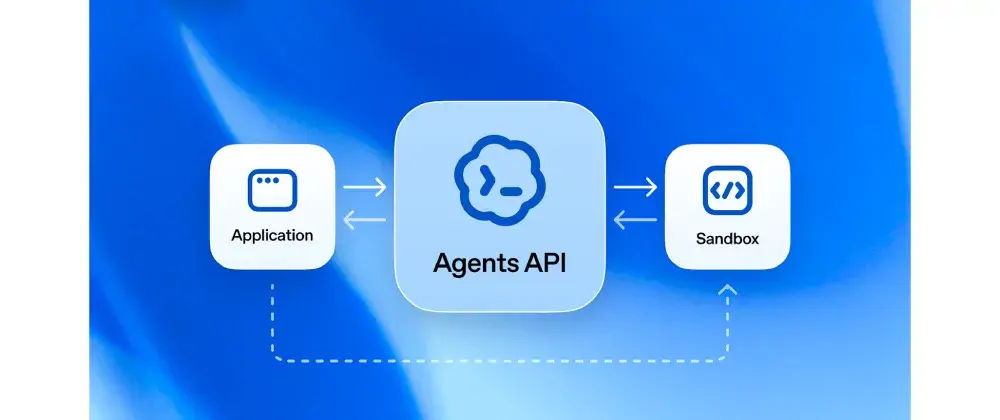
OpenAI introduced the Agents API in public beta, exposing the same managed harness and infrastructure used by Codex for developers building long-running agents. The service is designed around durable execution, context management, tools, subagents, files, code execution and environments that can preserve intermediate work across extended tasks.
The architectural significance is that agent orchestration is becoming a hosted platform layer. Teams can focus more on domain tools, policies and evaluation instead of rebuilding context compaction, task delegation and execution recovery from scratch — while still needing to decide which sandboxes and permissions an agent is allowed to use.
| Why it matters: This is a direct shift from model APIs toward managed execution APIs. Platform teams should evaluate observability, portability, failure recovery, subagent behavior, data boundaries and total cost per completed task before standardizing on a harness. |
Source: OpenAI — Introducing the Agents API · 10 Sep 2026
OPEN MODEL / ARCHITECTURE · 10 SEPTEMBER
DeepSeek V4.1 Flash targets lower inference cost with an asymmetric MoE design and smaller KV cache
DeepSeek released V4.1 Flash, a 552B-parameter mixture-of-experts model with a new causal encoder–decoder architecture. DeepSeek says only 8B parameters are active for input processing and 16B for output, and the model includes native visual understanding. The company also highlights a much smaller KV-cache footprint than its previous generation.
The release is particularly relevant to serving economics: agentic workloads repeatedly read large contexts, so cache memory and storage can become major cost drivers. DeepSeek made V4.1 Flash available through its API and published model artifacts and a technical report for the open-source ecosystem.
| Why it matters: For large-scale agents, model quality is only part of the bill. Architectures that reduce active compute and KV-cache requirements can materially change throughput, memory pressure and cost — especially when agents keep long histories or reuse large prompts. |
Source: DeepSeek — Introducing DeepSeek-V4.1-Flash · 10 Sep 2026
AI Models & Research
GPT-6 Sol and Luna extend the GPT-6 family down the cost curve
OpenAI released GPT-6 Sol and GPT-6 Luna on 22 September. Sol is positioned as a lower-cost alternative to Astra, while Luna is the fast, cost-efficient tier. The API changelog lists standard short-context pricing at $2 / $10 per million input/output tokens for Sol and $0.10 / $0.50 for Luna.
Source: OpenAI API Changelog · 22 Sep 2026
Grok 4.7 focuses on coding, long-running work and self-verification
SpaceXAI released Grok 4.7 on 21 September, describing a larger base model, a longer reinforcement-learning run and training weighted toward multi-hour tasks. The model is available through Grok’s API and coding surfaces, with the company emphasizing price-performance for agentic coding.
Source: SpaceXAI — Introducing Grok 4.7 · 21 Sep 2026
Anthropic reports an AI-assisted discovery of a novel enzyme system
Anthropic announced a new life-sciences research group and laboratory on 23 September and described an early result in which Claude helped identify and experimentally investigate a previously uncharacterized enzyme system with CRISPR-like repeats. The work is an example of frontier models moving from literature synthesis toward hypothesis generation tied to wet-lab validation.
Source: Anthropic — Claude discovers a novel enzyme system · 23 Sep 2026
Alibaba expands Qwen’s multimodal stack while putting Qwen 4 into training
At Apsara 2026, Alibaba said Qwen 4 is in training and outlined a roadmap toward larger Qwen 4.5 and Qwen 5 systems. September releases also included Qwen3.8-Omni-Flash, Qwen3.8-LiveTranslate and Qwen-Image-2.1, reinforcing Alibaba’s push across audio, vision, translation and agentic device use.
Source: Alibaba Cloud — Apsara 2026 full-stack AI roadmap · 25 Sep 2026
AI Model Comparison — September 2026
A practical snapshot of leading models covered in this issue. Scores are vendor-reported and are not perfectly apples-to-apples; validate on representative internal workloads before standardizing.
Model
| Positioning
| Coding signal
| Agent / work signal
| API price |
GPT-6 Astra
| Frontier model for demanding reasoning, coding and computer use | Terminal-Bench 4.0: 57.9%
| AutomationBench: 41.4%; FrontierMath T4: 98%
| $10 / $50
|
Claude Opus 5.5
| High-end daily driver for coding, agents and knowledge work | Terminal-Bench 4.0: 66.4%
| AutomationBench: 40.0%; GDPval-AA: 1846
| $4 / $20
|
Gemini 3.8 Flash
| Fast workhorse for coding, agentic tasks and multi-step reasoning | Google: best reasoning & coding Flash model yet | Designed for high-volume agentic workflows | $0.75 / $3.75
|
DeepSeek V4.1 Flash
| Cost-efficient multimodal model with open model artifacts | Terminal-Bench 4.0: 31.2%
| Automation-Bench: 54.8%; 1M context | $0.30 / $1.20 peak* |
*Prices are USD per 1M tokens and reflect standard/vendor-listed rates as of late September/early October 2026. DeepSeek uses peak/off-peak pricing. Benchmark setups differ by vendor and harness.
OpenAI — GPT-6 Astra / pricing
| Why it matters: The market is no longer “pick the smartest model.” The better architecture routes work by difficulty, latency, safety requirements and cost — then measures cost per successful task, not token price alone. |
Tin liên quan
Chi phí vận tải tăng cao cùng việc xếp hàng thủ công phụ thuộc vào kinh nghiệm đang khiến nhiều doanh nghiệp chịu tổn thất lớn: lãng phí không gian container, phát sinh thêm chuyến...

Trong kỷ nguyên số, việc tìm đúng người – đúng thời điểm ở quy mô lớn là bài toán thách thức của mọi bộ phận Nhân sự (HR). Việc lọc hồ sơ thủ công, đánh...

Trong kỷ nguyên số hóa, việc ứng dụng Trí tuệ nhân tạo (AI) không còn dừng lại ở mức thử nghiệm mà đã trở thành yếu tố then chốt quyết định năng lực cạnh tranh....